




On Thursday, 21 February, local residents were provided a sneak peek of the draft Melbourne Gardens Master Plan for 2019-2039, ahead of its release for public comment in March.
The Royal Botanic Gardens Victoria executive team said the Plan addressed two key challenges: climate change and population growth.
Melbourne’s average temperature is expected to be 3 degrees higher by the end of the century. This has profound implications for the flora and fauna of our gardens. Steps to protect plants used to current temperatures will need to be taken, and new plantings will need to be appropriate for a warmer climate.
It really brings home, in an intimate way, the scale and impact climate change will have on our planet. The imperative to take massive action now – we have till perhaps 2029 to try rein in climate change – is stark.
As for population growth, Executive Director Chris Cole, pointed out that, with a predicted population of 8 million people by 2040, a key part of the master plan is ensuring the gardens can cope with many more visitors. The gardens already have an astonishing 1.9 million visitors every year, an already huge number that will rise significantly over the coming two decades.
It is imperative to accommodate these visitors in a way that protects the values of the gardens that we all cherish: beauty, serenity, and a genuine experience of nature. Not easy. How many places have been ruined because too many people loved them? Bali, anyone?
Work on the Master Plan began in 2016 with ideas being submitted from across the community and a range of stakeholders. The plan is about to be released for public comment, so it’s not too late to share your thoughts before the Royal Botanic Gardens Board makes its final decisions.
One of the presenters on the evening, Professor Tim Entwisle, has been Director and Chief Executive of the Royal Botanic Gardens since 2013. “I grew up in these gardens as a child and spent many a day here as a uni student”, he said. “This is a very special project to me. The gardens need to be a vibrant cultural, horticultural and scientific destination that stays true to Guilfoyle’s original vision. We see ourselves as the living heart of Melbourne.”
As informed Melbournians know, William Guilfoyle (b. 1840 d. 1912) is the genius landscape gardener and botanist who designed the Melbourne Gardens, as well as many parks and gardens in Melbourne and regional Victoria. His vision remains the driving force, even as we look toward the mid-21st C.
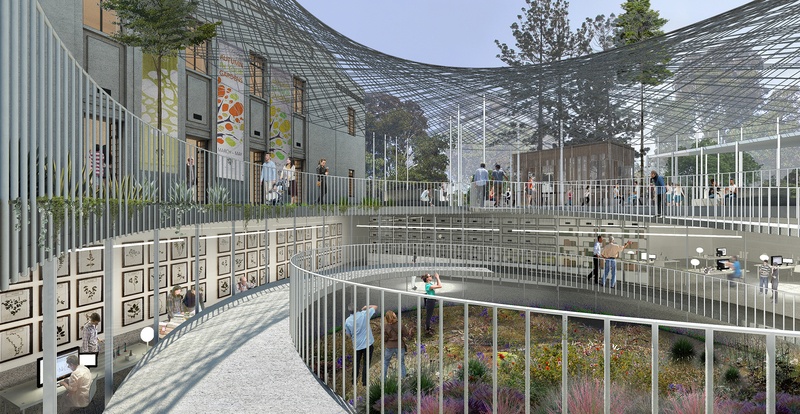
A primary objective of the Master Plan is to protect the $252 million state botanical collection in a new Herbarium. This collection contains 1.5 million specimens hailing back to Joseph Bank’s first expedition. A new building is proposed be the centrepiece of a ‘nature and science precinct’ and is expected to take five years to build.
Another major proposal includes recognising the Aboriginal history of the site with the building of a new entrance on the north side called Birrarung Gate. It will use natural building materials and contemporary building form. This new gate will cross over the Tan and connect to the new ferry launch, which also forms part of the Plan.
Other proposed projects include a wild woods centred around nature-based play for children and school groups; a new amphitheatre suitable for string quartets; and arid precinct and (down the track), a new lakeside conservatory.
The residents who attended the meeting were largely supportive of these bold, thoughtful ideas. Some raised immediate concerns, such as the apparent algae in the lake and a lack of eels which were once present.
The influx of Chinese tourists to the gardens in recent years caused concern for one local resident, who claimed tourist buses occasionally block driveways and polluted the air. It was suggested at the meeting that Chinese tourists now make up more than half of visitors to the gardens during the week.
For my part, and as a local who is privileged to have regular access to the Gardens and the Tan, it was deeply comforting to listen to people like Chris and Tim. They have a big-picture, bold vision for our Botanical Gardens, which responds to global pressures in ways that protect and enhance one of our city’s greatest assets, the living heart of Melbourne, indeed.
Do you have some suggestions for the 20-year master plan of the Melbourne Gardens? Please leave them as a comment below or look out for the public release of the draft plan in a few weeks.

